A point of view
A career spent designing environments where people thrive.
BOM is not the beginning of a wellness brand. It is the continuation of a twenty-year practice — a body of work about how thoughtfully designed environments shape the way people feel, behave, connect, and live.
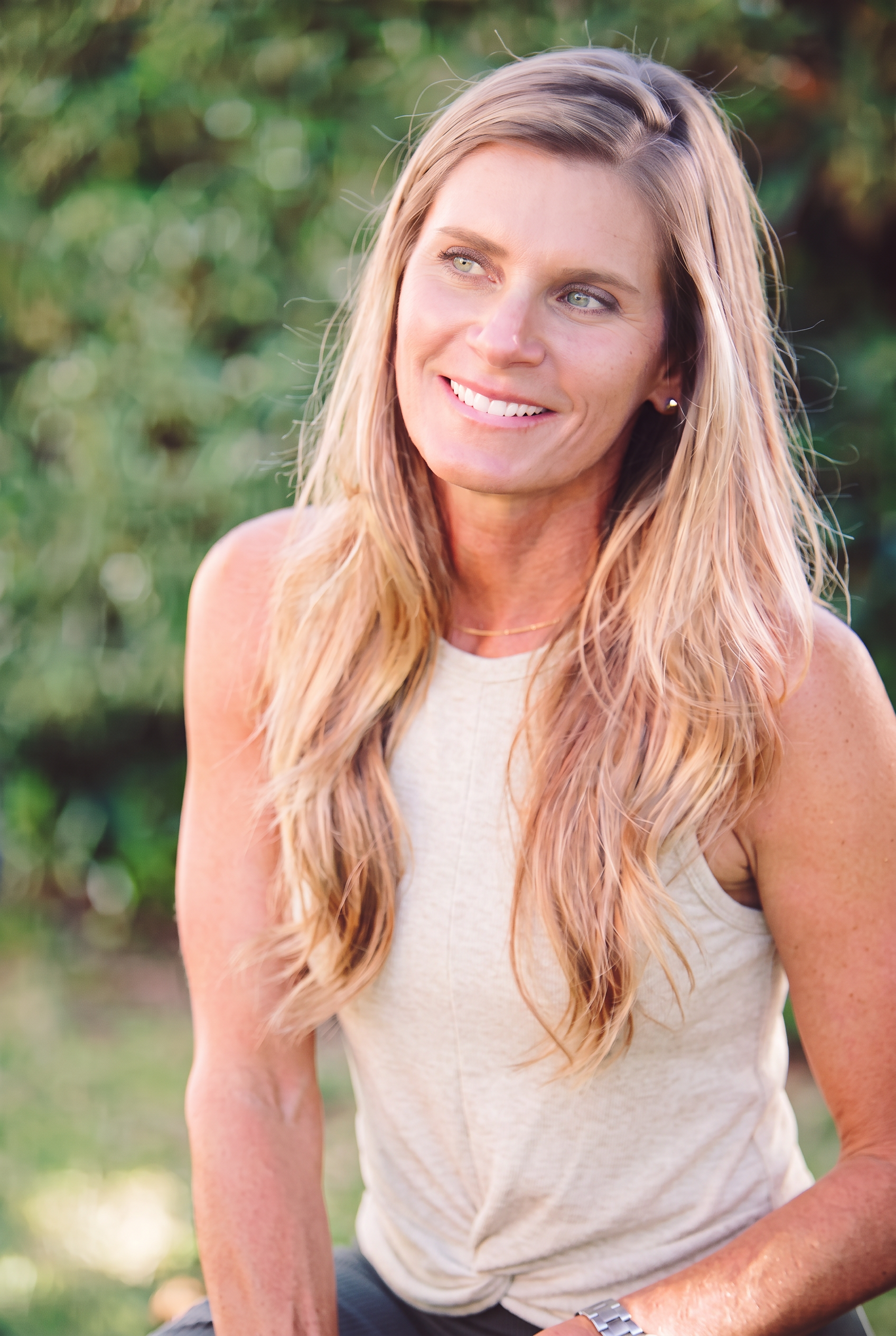
Kate — Founder
A holistic practice — mind and body, movement, nutrition, sleep, and the quiet architecture between them.
About Kate
How I came to believe that environments teach the body.
Kate works with women in midlife to build movement, strength, and health behaviors that carry them into the second half of life with steadiness and ease.
For more than twenty years, my work sat inside the largest question in retail and consumer experience: how a well-considered environment can influence the way a person feels the moment they enter it, and the decisions they carry with them when they leave. I led growth, store development, visual presentation, experiential marketing, brand strategy, and customer experience — different departments on different org charts, but always the same discipline. Design a room. Watch what happens to the human being inside it.
What I learned across those years is not what the industry usually credits. It is not that a beautiful room sells more. It is that a thoughtful room changes posture. It changes the pace of a conversation. It changes what people feel entitled to ask for, and what they feel capable of doing. Environment is not decoration. Environment is instruction. It teaches the body long before it speaks to the mind.
That observation followed me out of retail and into the rest of my life. I began to notice it in homes, in offices, in the studios I visited as a client, in the rooms my closest friends built for themselves in the second half of their lives. The women I admired most were not chasing wellness. They were quietly reorganizing their environments — their homes, their calendars, their company, their habits — so that their bodies and their thinking had a chance to hold up over decades. They were doing, in private, what I had been paid to do at scale.
The body is the most personal environment a woman inherits. It is also the one she is given the least help designing.
I came to Pilates, strength, mobility, nutrition science, mindfulness, and women's health the same way many women come to BOM: with questions. How do we stay strong? How do we age well? How do we build lives that continue to expand rather than contract? How do we remain capable through every season? I did not study these disciplines to become an instructor. I studied them because I needed the language. The language of environment was incomplete without the language of the body.
Somewhere along the way, I noticed something I had not expected. When a woman slows down long enough to move with intention, the nervous system often settles. Between one exercise and the next, between a question and a breath, the conversation deepens. Women begin to talk — about work, marriage, children, parents, changing bodies, anxiety, identity, life. This is not therapy. It is simply what happens when a room is designed well enough for someone to hear herself again.
Listening is part of my practice. I notice patterns. I ask thoughtful questions. I do not rush to fix what feels complicated. I try to help a woman organize what feels overwhelming into something practical, sustainable, and possible. Movement is often where we begin, but it is rarely the only reason someone stays.
Still, I believe movement matters more than the industry has taught us to say. Not because it burns calories. Because it changes how we experience being alive. Movement strengthens the body, settles the nervous system, and helps us process the weight we carry. It builds confidence, encourages curiosity, and quietly reminds a woman that she is capable — of the next decade, the next conversation, the next chapter she has not yet written.
I do not think of movement as something confined to a studio. It is in how we walk, how we breathe, how we recover, how we play. In how we carry our children and our parents. In how we travel, how we age, how we show up. A life in motion is a life more fully lived — not a busier one, a fuller one.
BOM is the natural evolution of that work — a house of practice for women who have stopped performing and started building. The studio is one room in it. Community, curiosity, and the company we keep are the others. Together they are the architecture of a life designed to last.
I hope every woman who walks through BOM leaves feeling a little stronger, a little steadier, and a little more capable of carrying the life she is building.
Come move with me.
xo Kate
The through-line
One discipline, three chapters.
Chapter I
Retail & experience.
Two decades leading growth, store development, visual presentation, experiential marketing and customer experience — learning, in practice, that space is a form of speech.
Chapter II
Leadership & brand.
Building and running teams around the belief that the environment a leader creates for her people is the truest strategy document she will ever write.
Chapter III
Movement & the body.
Certified in Pilates, strength, mobility, nutrition science, and women's wellness — the body treated as the most personal environment a woman inherits, and the one most worth designing well.
Retail was one expression of the work. Leadership was another. BOM is where all of it finally lives under one roof.

“To create one’s own world takes courage.”
Georgia O’Keeffe
How I work
Attention, not performance.
I work the way I have always worked: by paying attention to what is being said, and often to what is not. I ask questions. I wait. I adjust. The same discipline that once made me useful in a boardroom or on a store floor is the one I bring to a woman standing beside a reformer or sitting across from me in conversation.
I do not rush to fix people. I try to help them organize what feels overwhelming into something practical, sustainable, and possible. The work is slower than the wellness industry promises, but it is also more honest — and it lasts longer.
That is the difference between a brand and a house of practice. A brand is designed to be noticed. A house is designed to be lived in.
In their words
The house, from inside.
“After two car accidents and three years in physio, I was left with limited mobility and daily pain. Kate was able to do what physio could not. After only one year of working with her my pain is much reduced and my strength, flexibility and balance are the best they've been in many years. She is amazing and I'm deeply grateful to be her client.”
“I've had the pleasure of working with Kate over the past year, and she has been exceptional. My strength, stability, and confidence have grown tremendously under her guidance, and the positive impact has extended to both my body and mind. She has an incredible gift for meeting you where you are, encouraging you with equal parts expertise and compassion, and helping you surpass goals you didn't think were possible.”