N° 01 · On strength
Why we stopped calling it a workout.
A note on the language of the second half — and why the words we use in the room quietly build the body we take home.
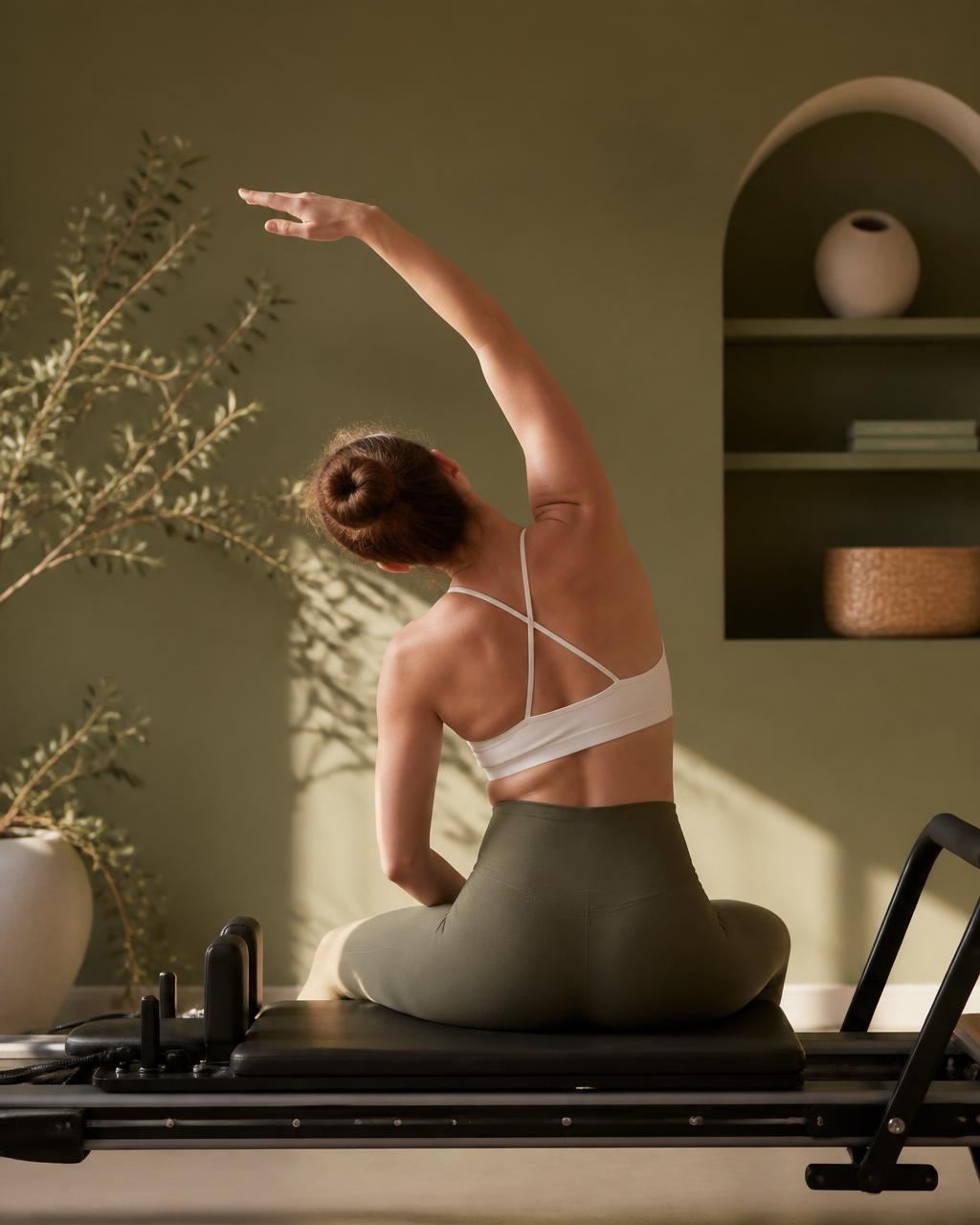
There is a moment in a woman's forties when the language of the gym stops fitting. Workout. Burn. Crush it. Reset. The words sound like a wardrobe from another life — bright, tight, borrowed. They belong to a body that was proving something. The body we are building now is done proving.
So we stopped using the word workout. Not out of preciousness. Out of accuracy. What we do in the room is not a workout. It is a practice — the same word a pianist uses, or a surgeon, or a gardener who has kept the same beds for thirty years. Practice is what you do because the doing itself is the point, and because tomorrow's practice depends on today's.
The problem with the old language
The vocabulary of the gym is built on urgency. It promises transformation in six weeks, results by summer, a snap-back after the holiday. It treats the body as a project to be closed out. But no woman in her second half is looking to close anything out. She is looking to keep going — with more capacity, less noise, and a longer view.
The body worth having at seventy is built at a much slower speed than the body sold on a January feed.
Old language also flattens the room. It treats a forty-three-year-old rebuilding after a second pregnancy and a fifty-eight-year-old in the middle of perimenopause as the same client, running the same program, chasing the same number on the same scale. They are not the same client. They should not be doing the same thing. And nothing about the words shred, torch, or bounce back invites the precision the work actually requires.
What replaces it
The words we use now are older and quieter. Foundation. Load. Room. Practice. Considered. The exercises haven't softened — the pace has. The intensity is real; the theater around it is gone. There is no music built to make you push through. There is breath, correction, and the quiet arithmetic of a set done well.
This is not a rebrand. It is a re-architecture. The language changes what the room asks of you, and what the room asks of you, over years, becomes the body you live in. Words are load-bearing. Choose them the way you choose the beams of a house you intend to live in for a long time.
A small practice
For a week, listen to how you speak about your own body — out loud, and in the private sentences you use with yourself. Note every borrowed word: hustle, grind, cheat day, bounce back, get back on it. Then, without ceremony, put them down. You do not owe them a farewell. Replace them with the plainer, older words: today's practice, this week's work, the next season. Notice what changes in the room after seven days of quieter language. The body listens to how it is spoken to. It always has.